About This Project
Specialist bees collect pollen from a narrow set of plants. Southern California’s deserts once hosted diverse woody legume specialist bees and their host plants. Are these specialist bees still present in their historic ranges? We hypothesize that specialist bee distributions have shifted in response to global change. This project will resurvey sites, collect bee and plant specimens and record interactions to compare current patterns to historic and modeled distributions.
Ask the Scientists
Join The DiscussionWhat is the context of this research?
Specialist bees are likely vulnerable to global change due to shifts in both their own climatic niche as well as their host plants' niches. Global change is likely to cause shifts in both distribution and life-history for taxa broadly, with evidence already present for life-history shifts in specialist bees. These factors could ultimately lead to a plant-pollinator mismatch, which could have adverse downstream effects on specialist bees by reducing their foraging efficiency and their niche partitioning of plant visitations. Modeling occurrence records of specialist bees and their host plant helps predict where overlaps may occur, but longer-term shifts are difficult to detect given collection gaps. This project's resurveys will address filling in these recent gaps, testing whether specialist bees have shifted their distribution in response to global change.
What is the significance of this project?
This project aims to fill gaps in our understanding of the current distributions for these specialist bees and their host plants. Resampling historic populations using museum records and ground truthing modeled distributional/phenological overlaps will provide valuable insights into understanding how global change could be impacting these species. The specimens collected for this project will also emphasize ecological associations, with direct species interactions and local plant community composition recorded. These specimens and their associated interaction metadata will also be digitized into the open access specimen data portals, including the Integrated Digitized Biocollections (iDigBio) and the Global Biodiversity Information Facility (GBIF), allowing their integration into other datasets and questions. In addition to our research goals, I will be taking both leaf litter and soil samples according to ATBI protocols for the targeted resampling sites.
What are the goals of the project?
Using species distribution models, we identified 62 specialist bee species overlapping 39 woody legume host plants in Southern California deserts. Of these, 24 bees and 7 legumes lack records in California for over a decade. We will resurvey sites based on historic and modeled ranges during a 2-week trip coinciding with peak legume flowering, guided by phenology models. Bee and plant specimens will be collected using prior resurvey protocols, with standardized search effort. All specimens will include both bee-plant interaction and community composition metadata. Bees will be identified and deposited at CCBER (UC Santa Barbara). Unique plant specimens per resurveyed site will be collected with duplicates and deposited at CCBER as well. Additional non-unique plant specimens with specialist bee interactions will be recorded using the tool FieldPrism. All specimens will be digitized to iDigBio and GBIF and used to analyze distributional shifts in my dissertation.
Budget
Funds will support travel and lodging in California for 14 total days and the purchase of supplies for the collection and curation of bee and plant specimens. Fieldwork will occur over 12 of these days, with travel to and lodging near targeted sites. The goal is to visit one target site per day, spending enough time to meet minimum search effort. There are currently 20 desired target sites to resample; however, given time constraints, we will prioritize the 12 sites with the most incomplete contemporary sampling. Additional sites may be included if located near priority sites and if they fit within the resampling study's design. On the last day in California, specimens will be delivered to the Cheadle Center for Biodiversity and Ecological Restoration (CCBER) at UC Santa Barbara, coordinated with Katja Seltmann.
Endorsed by

 Project Timeline
I have recently finished the analysis of distribution overlaps between these legume specialist bees and their host plants. I will finalize sites of highest priority and practicality for sampling by December and acquire permits for these areas/taxa. I will head to California during April to resample these taxa and collect specimens. After collection, I will deposit and identify these specimens at CCBER (UC Santa Barbara) with the help of Katja Seltmann.
Oct 16, 2025
Model distribution overlaps
Nov 17, 2025
Project Launched
Dec 10, 2025
Finalize site selection for resampling
Jan 01, 2026
Acquire permits and approval for specimens
Apr 10, 2026
Resample legume specialist bees and their host plants
Meet the Team
Affiliates
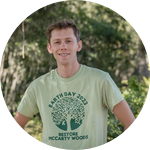
JT Miller
I’m a third-year Ph.D. student at the Florida Museum of Natural History, University of Florida Co-advised by Pam Soltis, Doug Soltis, and Rob Guralnick. My dissertation builds on my undergraduate research at UC Santa Barbara, where I studied bee diversity across California’s ecoregions. Now, I focus on how the biodiversity of flowering plants and bees is structured across North America’s deserts, and how these taxa are responding to global change. I have particular interest in pollen specialist bees, which are likely more susceptible to changes due to tightly knit host-plant interactions. I am passionate about finding new ways to leverage digitized natural history specimens in modeling biodiversity and global change, aiming to inform conservation efforts on these critical groups.
It may seem unusual that I focus on deserts while being based in Florida, but I chose the Soltis and Guralnick labs for their outstanding mentorship in macro-ecology, evolution, and museum data - all key components in how I view studying global change. When not writing code, I'm typically out trying to enjoy our planet's biodiversity through backpacking, hiking, and scuba diving.
Lab Notes
Nothing posted yet.
Additional Information
An additional goal for our project will be the collection and submission of leaf litter and soil samples according to ATBI. We will collect samples following ATBI protocols, and ship these samples on two day intervals during field collections as per their instructions.
Project Backers
- 2Backers
- 107%Funded
- $2,150Total Donations
- $1,075.00Average Donation