About This Project
We are researching new techniques for 3D printing mycelium to create flexible manufacturing methods and more versatile mycelium materials.
3D printing with mycelium has already been by different artists and researchers, but the practical applications of this technology have been left behind.
By developing new ways of printing multi material mycelium parts, more use cases for mycelium 3D printing can be explored to replace more conventional materials.
Ask the Scientists
Join The DiscussionWhat is the context of this research?
Researchers at TU Delft, Vrije Universiteit Brussels, Nanyang Technological University, and Texas A&M University have researched the 3D printing mycelium and others at Graz University of Technology showed that mycelium increases the bonding between 3D printed clay layers.
Outside of universities, mycelium 3D printing has been attempted only by a number of artists and architects like Eric Klarenbeek, Blast Studio, and Offina Corpuscoli. These latter projects have been quite exploratory in nature, serving as a proof of concept for mycelium 3D printing, and have focussed on making art pieces and niche, luxury interior fittings and furniture. There is a dearth of affordable, daily-use products or functional materials for the broader swathe of consumers or industry.
What is the significance of this project?
Mycelium shows incredible versatility - it can be coaxed into being foamy to leathery. It can replace fossil-fuel-derived and non-biodegradable plastics in many applications.
Currently, mycelium is grown on a multitude of substrates, resulting in different material properties. This shows that mycelium composites could effectively combine multiple material properties in one product, by layering or incorporating different compositions.
3D printing offers a valuable process to create truly customizable mycelium products, and multi-material processes in 3D printing already exist and are open source. Combining 3D printing with mycelium composites would allow anyone with access to mycelium and a 3D printer to research and develop new mycelium products.
What are the goals of the project?
Create and modify 3D printing tools for printing biomaterials
Custom hardware needs to be engineered and prototyped, including customizing firmware to print a compressible paste.
Develop a workflow with a tool-changing 3D printer to create bio-composites
Although hardware and software for 3D printing with multiple materials exist, these have to be modified to 3D print composites with mycelium.
Experiment with different substrates and mycelium strains
Substrates/supplements like cork, rice bran, coffee waste, and sawdust on different strains apart from only Pleurotus ostreatus and Ganoderma lucidum
Analyze the behavior of the resulting composites
A limited mechanical analysis of the resulting composites to show the properties of the materials.
Budget
In order to start 3D printing with multiple materials, we need a special tool changing 3D printer. This is the single largest expense and will be bought from E3D. (note that the price on their website does not include shipping or tax)
Extra 3D printer hardware includes the materials that we will need to create custom extruders for the biomaterials that we want to 3D print.
Cleaning supplies cost 60 euros. Other mycelium growing equipment include 3M P100 masks, nitrile gloves, lab coats, pressure cooker, induction stove, weighing scale, and blender, totaling 425 euros. Spawn of two strains of mushroom would cost 150 euros.
Transport costs include the costs of traveling to local waste stream providers, for example to a mill to get rye bran or a sawmill to get sawdust. These waste materials will then be used as the substrate for mycelium growth.
Currently we have had issues with contamination working from our student rooms. That is why we budgeted a small facility for 6 months.
Endorsed by
 Project Timeline
The first months of the project will mainly involve setting up the multi material printer and creating the tools necessary to extrude biomaterials. Then, in the next months the first tests will be done with multi material printing. Because of the nature of mycelium growth, this will take quite some time to finish and for results to be available. We will keep updates on this websites to show our progress
Sep 20, 2022
Developed printable mycelium paste
Oct 20, 2022
Receive tool changing 3D printer
Nov 05, 2022
First tests with multi material mycelium printing conclude
Nov 05, 2022
Midterm evaluation
Nov 25, 2022
Build 3D printer with special extruders
Meet the Team

Team Bio
When we first met, Poorva was growing oyster mushrooms in her bedroom and I was tinkering with 3D printing in mine. It didn't take long before it 'clicked' for us that 3D printing and mycelium are natural partners. This inspires us to combine the millions of years of evolutionary intelligence of mycelium with the cutting-edge versatility of 3D printing technologies - to solve 21st century problems.
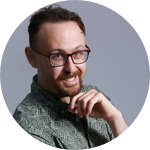
Robin ter Heide
Mechanical engineering student at TU Delft and 3D printing specialist.
3 years ago, I bought my first 3D printer. Since then, I've been hooked. I love building my own printers, designing and prototyping useful objects, tinkering and troubleshooting with the hardware, exploring different softwares like SolidWorks, Fusion360, and Blender, and generally getting busy with the mechanics of these technologies. With years of experience with 3D printers and mechanical design I have now built up a unique skillset that allows me to rapidly prototype and solve engineering challenges.
In our current project about 3D printing mycelium, I modify my own 3D printers to be able to extrude mycelium composite pastes as well as model our target products and shapes in SolidWorks, Fusion360, Blender, and Grasshopper.
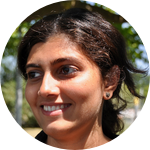
Poorva Shrivastava
I'm currently doing my Master's in Bioprocess Engineering at Wageningen University & Research in the Netherlands. In my free time, I grow mycelium objects and learn 3D printing. I'm currently a bioprocess engineering intern at Grown.bio, a pioneer in mycelium packaging.
Recently, I finished my thesis on natural deep eutectic solvents as one-step algal biorefineries.
During my Bachelor's in Biotechnology Engineering in India, I set up my own social business, CharKoyla. I created high-quality biochar from waste like coconut husks at temples, invasive species like Lantana camara and water hyacinth to filter pesticides and other synthetic contaminants from drinking water. This led to a two-year journey of culminating in a pilot project in a small Indian village: a drinking water treatment plant for the village, operated by two local women from the village.
Before my Bachelor's, I grew up in Saudi Arabia, in the largest industrial city in the world - the cradle of the petrochemical industry! This industry has not only shaped my entire life, but informed my understanding of the challenges ahead of us as we transition to a biobased economy.
My professional experience has been extremely varied, spanning continents and topics, but it has a common thread. What makes me tick? Exploring innovative ways to use waste biomass, from making biochar to growing mycelium materials. What else? A good challenge that I can dig my teeth into.
Lab Notes
Nothing posted yet.
Project Backers
- 0Backers
- 0%Funded
- $0Total Donations
- $0Average Donation