

Please wait...
About This Project
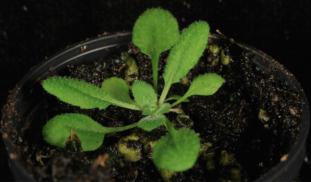
Salt is dangerous to most plants, as it quickly disrupts their ionic homeostasis and their physiology. Most studies on plant adaptation to soil salinisation focus on the root, the part of the plant directly exposed to the salt. However, my recent recent work shows that application of salt to the roots induce long-distance electrical signals that quickly travel to the leaves via the phloem. These data open new questions regarding the role of systemic electrical signals in salt adaptation.

Browse Other Projects on Experiment
Related Projects
Satellite tracking the secret lives of vulnerable juvenile Loggerhead sea turtles off Morocco’s Coast
This pioneer project marks the first time in Morocco's history for satellite transmitters deployed on sea...
Out for blood: Hemoparasites in white-tailed deer from the Shenandoah Valley in Northern Virginia
Our research question centers about the prevalence and diversity of hemoparasites that infect ungulate poplulations...
Using eDNA to examine protected California species in streams at Hastings Reserve
Hastings Reserve is home to three streams that provide critical habitat for sensitive native species. Through...
