




Please wait...
About This Project
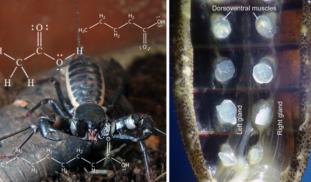
Whip scorpions (vinegaroons) such as the North American species Mastigoproctus giganteus - an unusual arachnid of the pet trade – spray acids at would-be attackers using a pair of pygidial glands. The recipe of this acid cocktail includes a variety of different compounds, but to date, the genetic, biochemical, and cellular bases for acid production remain a mystery. Here, we propose to investigate the genes and pathways in the pygidial glands that lead to this unique form of defense.

Browse Other Projects on Experiment
Related Projects
Coupling of microbial carbon capture and utilization (microCCU) and direct air capture (DAC)
Reducing atmospheric CO2 is critical to mitigating climate change, and negative emission technologies (NETs...
Enhancing Carbon Sequestration By Improving Photosynthetic Efficiency
Enhancing photosynthesis can help mitigate greenhouse gases, but plants and algae use only visible light...
Copper gene-switch for controllable gene expression in plants
Chemical-induced promoters or "Gene Switches" allow expressing a gene of interest in a controllable manner...
