About This Project
Dengue fever is a major health crisis in tropical regions like Indonesia, with Yogyakarta reporting 2,891 cases in 2024, mostly from DENV2 and DENV3 strains (Yogyakarta Health Office, 2024). We address this through a chimeric vaccine targeting both strains using genetic modifications. Our innovative approach uses tobacco plants with a cost-effective genetic promoter, enabling affordable large-scale production and improving vaccine access in endemic regions to protect vulnerable communities.
Ask the Scientists
Join The DiscussionWhat is the context of this research?
Our research advances theoretical dengue vaccine designs into practical laboratory testing. We identified a promising chimeric candidate combining DENV-2 and DENV-3 envelope domain III (EDIII) proteins, showing enhanced receptor binding affinity to human cells. To produce this vaccine affordably, we engineer a tobacco plant expression system using a salt-inducible promoter, which activates gene expression under salt stress (Yarra et al., 2012), and an improved INPACT (In Plant Activation) system enabling high-level, controllable protein production (Dugdale et al., 2013). We introduce this construct via Agrobacterium tumefaciens-mediated transformation, a common method for stable gene delivery in plants (Horsch et al., 1985). This integrated, cost-effective platform could transform vaccine accessibility in endemic regions, potentially protecting millions vulnerable to severe dengue disease.
What is the significance of this project?
The significance of this project lies in its innovative approach to using *Nicotiana tabacum*, a tobacco plant widely cultivated in Indonesia, as a host for protein production. By leveraging plant molecular farming, we aim to demonstrate the feasibility of this system for high-yield protein expression, which could be pivotal for vaccine production. Indonesia, with its extensive agricultural resources, holds significant potential to adopt *Nicotiana tabacum* as a new chassis for biopharmaceutical production. Plant molecular farming is renowned for its high yields due to the large biomass of plants, making it an attractive and cost-effective alternative to traditional expression systems. This project presents a proof of concept that not only enhances vaccine production but also positions Indonesia as a key player in the emerging field of plant-based biotechnology.
What are the goals of the project?
This project aims to establish a proof of concept for using Indonesian-grown Nicotiana tabacum as a biomanufacturing platform for producing dengue virus serotype 2 (DENV2) antigens. We are developing protocols to agroinfiltrate 200 plants with our chimeric DENV2 construct, followed by salt-induced protein expression using a modified INPACT system. After extraction, recombinant proteins will be purified using affinity chromatography and validated for their structural integrity and binding efficacy specific to DENV2. The purified antigen will be tested in cell line model DC2.4 and HEK293 cells expressing DENV2 receptors to evaluate immune activation markers and antigen binding through ELISA and Western Blotting. This proof-of-concept study aims to demonstrate the feasibility of using plant-based systems for localized, cost-effective dengue vaccine production, laying the groundwork for future development.
Budget
The listed budget items are essential for our dengue vaccine development using tobacco plants. These include microbiological materials (E. coli and Agrobacterium tumefaciens cultures) and molecular biology reagents organized in three categories: (1) cloning supplies (plasmids, Gibson Assembly Kit, Golden Gate enzymes, polymerases, and master mixes) for constructing our chimeric dengue vaccine genes; (2) DNA purification kits for isolating and preparing high-quality genetic material; and (3) protein expression and purification tools, including His-tag chromatography columns for isolating the vaccine proteins from plant tissue. Our lab already possesses greenhouse facilities with established Nicotiana tabacum plants, BSL-2 space with access to inactivated DENV strains, and immunological testing equipment including ELISA readers and flow cytometry for vaccine evaluation. Personnel costs are covered by our university's graduate research program
Endorsed by

 Project Timeline
Our 16-month project starts with computational design (July–Dec 2024), followed by characterization via binding assays and structural analysis (Jan–July 2025). We then evaluate intron functionality (July–Aug 2025), proceed to protein expression and purification (Aug–Oct 2025), and conclude with publication, iGEM presentation, and preparation for partnerships or acquisition (Oct–Nov 2025).
Jul 28, 2025
Assembly of engineered part
Aug 04, 2025
Transformation into E. coli and A. tumefaciens
Aug 11, 2025
Project Launched
Aug 18, 2025
Transformation into N. tabacum
Aug 30, 2025
Salt-induced promoter activation
Meet the Team


Team Bio
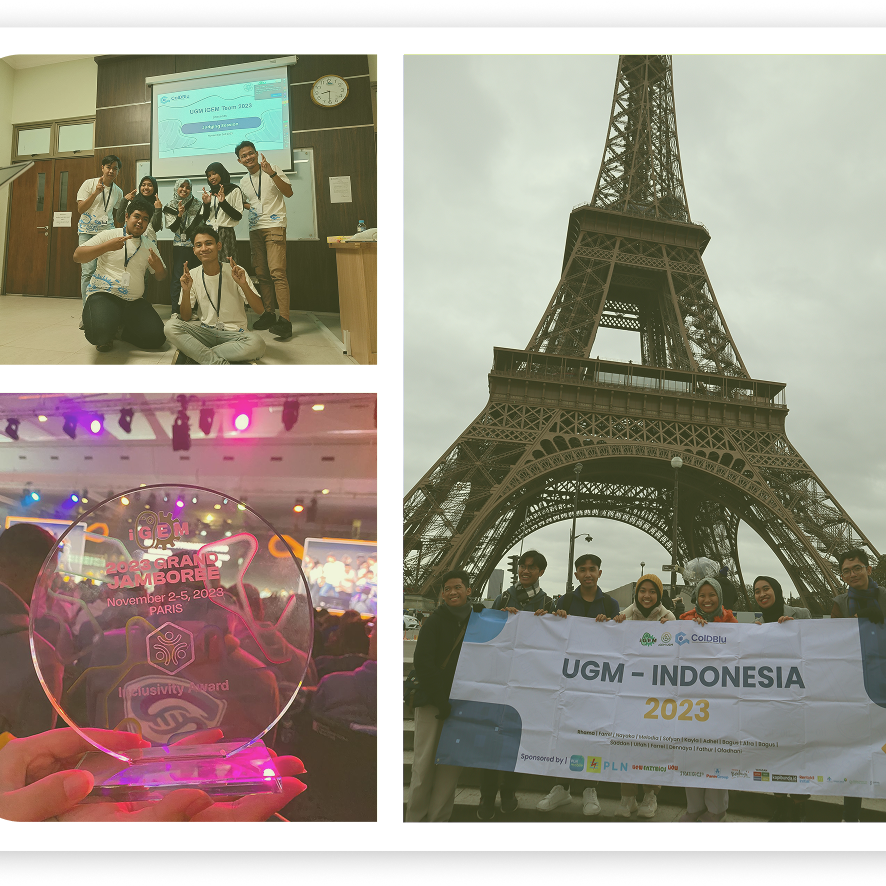
iGEM UGM is a multidisciplinary synthetic biology team from Universitas Gadjah Mada researching molecular farming of dengue vaccine in tobacco plants. Led by Prof. Yekti Asih Purwestri (PI), Dr. Widhi Dyah Sawitri (Co-PI), Dr. Setyowati Triastuti Utami (Instructor), with advisors Matin Nuhamunada & Adhityo Wicaksono. Key achievements: iGEM competition success, publications, and industrial partnerships.
iGEM UGM
iGEM UGM is the first team in Universitas Gadjah Mada who will participate in iGEM competition. This team consists of students from various diciplines euther Biology, Medicine, Pharmacy, Agricultural Technology, Computer Science, and Information Engineering. This team is under the supervision of several STEM lecturers.
Erwinda Dwi Chofifah
Biology specialist providing fundamental expertise in molecular biology, genetics, and plant systems for iGEM UGM's dengue vaccine molecular farming project. Her understanding of biological processes, gene expression, and cellular mechanisms strengthens the team's synthetic biology approach to developing innovative tobacco-based vaccine manufacturing solutions for global health challenges.
Fahmi Ihsanuddin Jauhari
Pharmaceutical student contributing specialized knowledge in drug formulation, vaccine stability, and therapeutic applications to iGEM UGM's dengue vaccine molecular farming project. His background enhances the team's understanding of vaccine development protocols and regulatory requirements, supporting the translation of tobacco-based antigen production into viable dengue prevention strategies.
Farrel Amroe Azhari
Computational expert developing bioinformatics tools, modeling systems, and data analysis pipelines for iGEM UGM's molecular farming research on dengue vaccine production. His programming skills enhance the team's research capabilities through computational biology approaches, sequence analysis, and digital solutions for optimizing synthetic biology workflows in tobacco-based antigen expression studies.
Muhammad Ridwan Adyatama
Animal science student applying expertise in biological systems, genetics, and biotechnology to iGEM UGM's synthetic biology research on dengue vaccine production in tobacco plants. Contributes to understanding antigen expression, protein characterization, and biological foundations essential for developing effective plant-based vaccine production systems for global health applications.
Yekti Asih Purwestri
Leader of iGEM UGM's groundbreaking synthetic biology research on molecular farming of dengue vaccine in tobacco plants. Directs innovative biotechnology solutions addressing global health challenges. Her expertise in synthetic biology and biotechnology applications drives the team's success in iGEM competitions, scientific publications, and securing industrial partnerships for scalable vaccine production.
Lab Notes
Nothing posted yet.
Additional Information
If this project is successful, we plan to present it at the iGEM 2025 competition in October. Additionally, our team will be the first research group in Indonesia and the world to study *Nicotiana tabacum* as a chassis for protein production.
Project Backers
- 2Backers
- 2%Funded
- $120Total Donations
- $60.00Average Donation