About This Project
We aim to explore the feasibility of Neo-pedogenesis and bio-remediation as primary applications of CDR through bioweathering of alkaline rocks. The proposed approaches are low-risk, high benefit strategies aiming to create economic, ecological and environmental value through the use of EBW. We address the inherent dangers associated with EBW (Heavy metal leaching) by measuring it, evaluating the risk and proposing to transform it into a profitable venture: biomining
Ask the Scientists
Join The DiscussionMotivating Factor
In order to de-risk Biological weathering and assess its value as a NET in the scope of fighting climate change, experimental procedures are still needed to quantify the carbon capture in real life applications from neo-pedogenesis and bioremediation to bio-mining and soil carbon sequestration (1). In order to bridge the gap between laboratory data and field applicability, the safest applications (economically, socially, environmentally) must be tested to obtain data with enough significance and allow for quick deployment (2).
Using the data already existing on the subject, a relatively low tech approach with hybrid lab-field experiments can bring the final CDR quantification data to enable evidence-based decision making on specific applications, while providing many of the missing elements to evaluate TEA and LCA. Also, some dangers are still presently unaddressed that might further delay the applicability of these technologies.
Specific Bottleneck
Specific functional parameters are lacking for many rock-dwelling biotic communities regarding their weathering potential, technical and economic feasibility and their ecological relevance and safety.
From indigenous plant communities at different successional stages to selected or modified organisms, many competing technologies seek to optimize DAC, possibly coupled with other NETs or economically relevant activities. The difficulties are mostly in quantifying the weathering rates in order to correlate them to Carbon capture as well as the feasibility of these different approaches and relevance to CDR
The safety of BW regarding heavy metal leaching from minerals is also a significant risk that needs to be quantified and addressed in order to de-risk many of its applications.
Another limiting factor is the low availability of low to medium tech protocols for local evaluation of these parameters, making the monitoring of relevant data complicated and lab-dependent.
Actionable Goals
A simplified model to evaluate bioweathering has to be synthesized with easily measurable KPIs in order to comparably evaluate bioweathering vs passivation, the flux of cations and the integration of biophysicochemical parameters in the model.
Endemic and regional microbial and plant communities’ effects on limestone and sandstone weathering needs to be quantified in different applications. These can be in turn compared with abiotic weathering and the effect of axenic and modified organisms in different reactor types, as well as made to work synergistically with them in order to reach optimal utility and acceptability.
The economic utility for these applications is also a great factor for their viability, where coupling CDR with economic production, pollution remediation and natural habitat expansion makes CDR more realistically applicable
Budget
A partnership between EcoLocus and Recycle Lebanon led by scientist Remy Petit. Budget allocations for personnel, equipping lab and the resources needed for the experiment.
Meet the Team
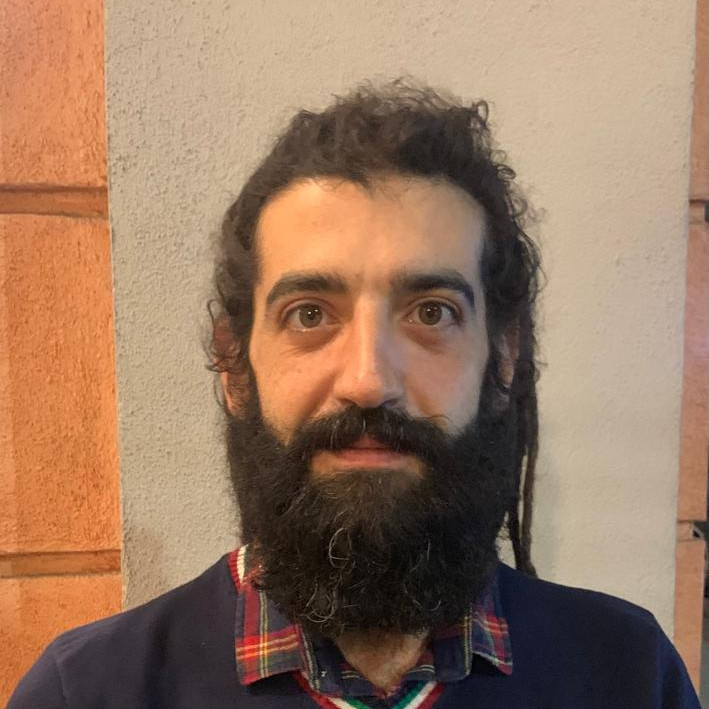
Remy Petit
On the forefront of innovative agro-forestry and applied mycology, I aim to widen the applicability of the most sustainable agricultural practices and the innovation of new ways to interact with the field to meet our needs, as well as innovative solutions to organic waste streams.
I am the scientist managing the lab at Terrapods, a low tech biology lab in a forest garden on a mission to replace plastics using bio-materials, innovate in agro-forestry practices and inspire research through collaborative work and shared resources.
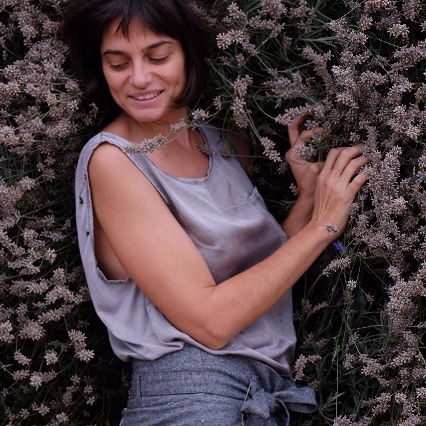
Joslin Faith Kehdy
Joslin lives off-grid, homesteading in the rural village of Baskinta. A passionate happenmaker and founder of Recycle Lebanon - a creative ecology NGO accelerating the transition towards regenerative system change.
Recycle the System – Design Out Waste.Our four programmes steward access to resources at the intersection of bio-material innovation, collaborative self-sufficiency practices, data visualization, & planetary justice. Our mission is to model regenerative practices through a holistic approach that catalyses action. TerraPods a living lab, artist residency & agroecology farm, cultivating biofabrication, creative ecology & regenerative alternatives. It fosters innovation, R&D & community-driven solutions that reconnect ecosystems, economies & creative expression. EcoSouk the region’s first free-from zero waste shop offering local, refillable, reusable, and bio-based products. Regenerate Hub a circular economy platform mapping and data visualising cross-sectorial insights and material flows. Dive Into Action a policy and empowerment programme advancing ecological initiatives and community engagement.
Seda Yontem
www.linkedin.com/in/sedatemize...An architect and sustainable design specialist with over 20 years of experience, I focus on shaping future cities through sustainability, technology, and innovation. My work emphasizes energy-efficient, environmentally conscious design, integrating nature into urban environments to promote biodiversity and create high-performance, net-zero communities. With expertise in building energy modelling, life cycle cost analysis, urban sustainability, and nature-based solutions, I prioritize wellness and comfort in liveable, equitable spaces.
Additional Information
An optimised strategy can be deduced from these characteristics to propose an efficient field-based ERW that allows increasing production on previously unsuitable rock slabs and obsolete concrete installations.
The creation of soil from these inert minerals is itself a large potential carbon sink, with agroforestry, bioremediation, biomining and other NETs able to complement the functionality of these projects for an even more advantageous TEA and LCA.
Project Backers
- 0Backers
- 0%Funded
- $0Total Donations
- $0Average Donation