About This Project
Reducing atmospheric CO2 is critical to mitigating climate change, and negative emission technologies (NETs) play a key role. Microbial carbon capture and utilization (microCCU) offers a carbon-negative alternative but relies on limited CO2 sources. Direct air capture (DAC) is promising but costly due to energy-intensive desorption. Coupling microCCU and DAC could overcome mutual limitations by using microbial CO2 fixation to mitigate the high energy consumption of DAC.
Ask the Scientists
Join The DiscussionMotivating Factor
Mitigating climate change requires reducing CO2 in the atmosphere. The first critical action is to reduce current CO2 emissions. Second, negative emission technologies (NETs) are pivotal to removing past emissions and neutralizing current CO2 emissions that are hard to abate. One example is the chemical industry, which has shown limited progress in decarbonization compared to transport and power generation. Here, CO2-based microbial chemical production offers a promising carbon-negative solution. Microbial CO2 conversions into our essential chemicals are not energy intensive, making this approach promising for decarbonizing the chemistry industry.
One leading NET is direct air capture (DAC), which typically employs a two-stage process that separates CO2 from the atmosphere by absorption and releases high-purity CO2 by desorption. Despite its potential of gigaton-scale removal if widely implemented, current DAC technologies are not economically competitive.
Specific Bottleneck
Despite its carbon-negative promise, CO2-based microbial chemical production is rarely implemented. Proof-of-concept systems often assume renewable high-purity CO2 from DAC, which is not commercially viable yet. Carbon capture and utilization by microbes (microCCU) holds industrial potential, for example, for anaerobic flue gas from steel mills [1]. Yet, microbes converting CO2 into chemicals are often sensitive to O2, impairing their use of flue gases with O2. Besides, atmospheric CO2 is too dilute for them to grow and produce chemicals.
DAC also faces challenges. Existing DACs suffer from an inherent coupling of absorption and desorption. A strong interaction with CO2 is necessary for capturing CO2 from a dilute source, but this inescapably links to a high energy penalty for subsequent release of pure CO2. This trade-off has stimulated extensive research into solvents or kinetic promotors [2,3,4], but novel, innovative approaches are needed.
Actionable Goals
Coupling microCCU and DAC has the potential to eliminate each other’s bottlenecks. Microbial CO2 removal acts as a thermodynamic sink in DAC, creating a thermodynamic driving force for desorption to address the trade-off in DAC from a new angle. Namely, a naturally evolved CO2 fixation pathway reduces the high energy requirements for DAC. Also, this coupling can deliver much higher CO2 and much less O2 than air to microbes for chemical production.
However, optimal CO2 absorption/desorption conditions in DAC, such as high pH levels and temperatures, often differ from microCCU needs. A multidisciplinary team should rationally develop microbe-assisted DAC as a potential strategy to make microCCU and DAC economically viable, considering an appropriate choice of absorption solvent and microbe, use of kinetic or thermodynamic promotors, and bioprocess strategies ensuring effective coupling of absorption/desorption columns and a bioreactor.
Budget
The breakdown is described in the solution statement.
Meet the Team
Affiliates

Team Bio
Our research team for this interdisciplinary project consists of researchers with expertise in carbon capture using absorption-stripper systems, and researchers with ample experience in bioconversion of CO2 into valuable chemicals. We believe that the strength of our team relies on our extensive knowledge in two separate fields, that joined together, can result in a new proof-of-concept of a technology that can potentially enable to do microbial carbon capture and utilization from DAC.
Hiroki Yoshida
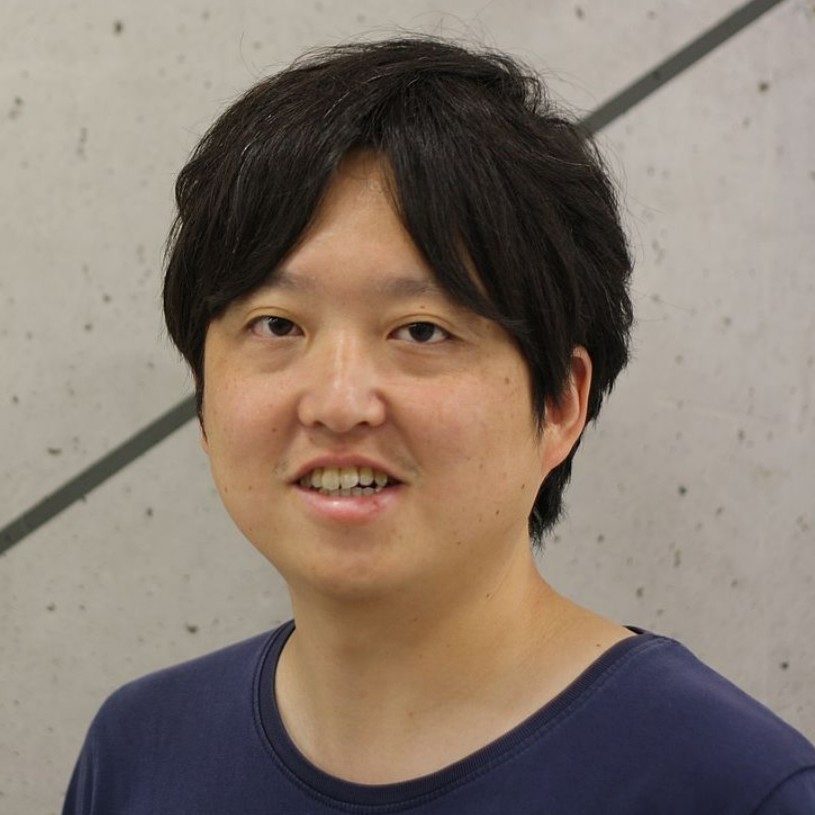
Hiroki Yoshida is a third-year PhD student in the Department of Geosciences at the University of Tübingen (Germany). He works in the research group of Environmental Biotechnology at the University of Tübingen, under the supervision of Professor Lars Angenent. His original background is in chemistry (B.Sc. and M.Sc. from Tohoku University, Japan). After several years of industrial experience in chemical engineering, he obtained a Master´s degree in Biobased Sciences from Wageningen University (the Netherlands). His PhD project aims to expand the potential of anaerobes using novel operational modes in bioreactors. Hiroki brings his expertise in bioprocess engineering and anaerobic cultures to this team.
Marta Iglesia
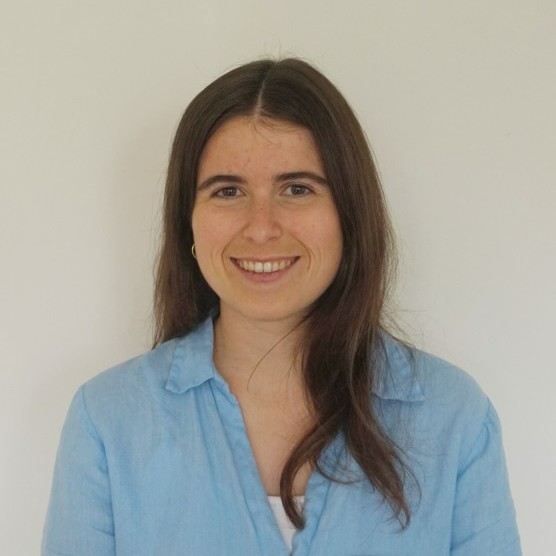
Marta Iglesia is a third-year PhD student at the Technical University of Denmark (DTU), in the Department of Biotechnology and Biomedicine. She works in the Interfacial enzymology research group, under the supervision of Professor Peter Westh. She has a background in biochemistry (Bachelor´s degree at the Autonomous University of Madrid, Spain) and biotechnology (Master´s degree at the Technical University of Denmark). The focus of her PhD project is on enzyme-assisted carbon capture using aqueous solvents. She will bring to this collaboration project her knowledge of enzyme-enhanced CO2 capture and desorption in a lab-scale absorber-stripper system.
https://dk.linkedin.com/in/marta-iglesia/en
Peter Westh
https://www.bioengineering.dtu...
Peter Westh is a Professor in the Department of Biotechnology and Biomedicine in the Technical University of Denmark (DTU). He is the principal investigator of the research group of Interfacial enzymology in the Section for Protein Chemistry and Enzyme Technology in the same university. He obtained his PhD in Biochemistry from the University of Copenhagen (Denmark) and subsequently worked as a postdoc first at the Johns Hopkins University in Baltimore (USA) and later at the University of British Columbia in Vancouver (Canada). He then became a Professor of Physical Chemistry at the University of Roskilde (Denmark), and is currently a Professor of Enzymology at the Technical University of Denmark. Peter provides to this project his strong expertise in the life sciences fields of physical chemistry, protein chemistry, catalysis, enzymology and enzyme engineering. He has significant experience in the supervision of 50+ PhD students and postdocs, and has an extensive collaboration history with the research industry.
Lars Angenent
Lars Angenent is a Professor in the Department of Geosciences at the University of Tübingen (Germany) and a part-time Professor in the Department of Biological and Chemical Engineering at the University of Aarhus (Denmark). He is also a Max Planck Fellow at the Max Planck Institute for Biology in Tübingen. He is the principal investigator in the Environmental Biotechnology research group at the University of Tübingen. He obtained his PhD at Iowa State University, and later worked as a postdoc at the University of Illinois at Urbana-Champaign and at the University of Colorado Boulder. He moved to Washington University in St. Louis to work as an Assistant Professor, and then became an Associate and Full Professor at Cornell University. Finally, he moved to the University of Tübingen where he works as a Professor, while leading the Environmental Biotechnology group. Throughout his academic career, Lars developed his proficiency in bioprocess engineering with microbes (biosynthesis of fuels and chemicals). The focus of his research group is on power-to-gas, power-to-protein, power-to-X, anaerobic fermentation, bioelectrochemical systems, and syngas fermentation. His extensive expertise in these areas will be a very valuable asset for the success of this project.
Project Backers
- 0Backers
- 100%Funded
- $99,000Total Donations
- $0Average Donation