About This Project
We would like to work with Salinas’ community members to explore the soil microbiome of the Natividad park creek and community garden while exploring topics in data sovereignty through making individual data servers to store environmental data.
Ask the Scientists
Join The DiscussionWhat is the context of this research?
We are working with a community garden to study the diversity of its soil microbiome. Environmental microbiome data can reveal soil health, contamination, land use patterns, and environmental pressures that directly affect the community. These data can also be sensitive because they reflect local practices, stewardship decisions, and ecological relationships. Lange’s paper, “Microbiome ethics: Guiding principles for microbiome research, use and knowledge management,” published in Environmental Microbiome, highlights how environmental microbiome data must be governed carefully to avoid harm or misuse. This project teaches students to build and control their own data servers so they learn responsible ways to store and protect environmental microbiome data.
What is the significance of this project?
This project is significant because it teaches students how environmental microbiome data can inform community health, soil quality, and ecological stewardship. By studying soil from a community garden, participants learn how microbial diversity reflects environmental conditions while also exploring the cultural importance of caring for land. The project shows that many forms of data such as photos, field observations, videos, and cultural knowledge also require careful storage and consent. By building their own servers, students gain practical skills in data sovereignty and learn how communities can control and protect both scientific and culturally significant information.
What are the goals of the project?
The goals of this project are to teach students how to analyze soil microbiome sequencing data and understand how microbial diversity reflects environmental conditions in a community garden. Students will learn basic bioinformatics skills to interpret their results and connect them to ecological and cultural contexts. A second goal is to help students practice data sovereignty by building and using their own personal servers. Each participant will store their individual findings along with other important data such as photos, videos, field observations, and cultural notes. By managing their own data space, students learn how to protect, organize, and govern biological and cultural information in a responsible and community-centered way.
Budget
The budget supports a portion of a biology-focused, hands-on curriculum where students build their own data servers to learn how biological data should be ethically stored, protected, and governed. By assembling personal servers, participants gain direct experience managing access to sensitive biological information.
This is essential preparation for working with microbiome and environmental DNA sequencing data, where issues of consent, privacy, and data sovereignty are increasingly important. Students learn that biology is not only about collecting samples, but also about responsibly stewarding the data those samples generate.
Importantly, at this stage, we would like to buy a single server as a proof of concept that there is technological and procedural capabilities for communities to have sovereignty over their own data, specifically microbial data from the community garden.
 Project Timeline
We will finish collecting and processing the soil 16S DNA sequencing data by December. In the spring, we will design the teaching module, including microbiome analysis and data sovereignty activities. The module will be implemented in the summer at BioJam, a science and art camp for migrant teens. Students will analyze the sequencing results, learn environmental microbiology, and build personal servers to practice data sovereignty with their findings.
Dec 06, 2025
Read Soil Microbiome DNA - Nanopore minION
Dec 13, 2025
Preliminary Soil Sequencing Data Analysis - Coldsprings Harbor Pipeline
Mar 02, 2026
Curriculum Drafting - Develop teaching materials for microbiome interpretation, environmental context, and data sovereignty principles.
Apr 01, 2026
Module Design - Create lesson plans, hands-on activities, and server-building guides. Identify needed equipment and finalize budget.
May 01, 2026
Server Prototype Design - begin prototyping the physical personal server, including hardware layout, enclosure options, and data storage workflow.
Meet the Team
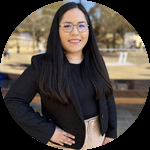
Annel Andrea Leon
I am a Quechua bioengineer and community scientist focused on making science accessible, culturally relevant, and accountable to the communities it serves. My work combines molecular biology, data science, and public engagement. At Stanford, I conduct research in the Gomez-Ospina Lab on genome-edited hematopoietic stem cells for lysosomal storage disorders. I lead functional studies on DNASE1L3 variants using PCR, enzymatic assays, and protein analysis. At the Broad Institute, I analyzed datasets such as PRISM and CCLE to identify drug repurposing candidates. In my Biodesign Capstone, I led in-vitro assay development for a bacteriophage-based emollient designed to reduce infections in preterm infants. Outside the Stanford lab, I lead community-based science efforts. I organized a two-day Foldscope workshop for high school students in Ayacucho, Peru, and created bilingual microscopy lessons tailored to local context. As Vice President of BioJam, I co-develop hands-on STEM workshops for migrant youth in the Salinas Valley. I also received training in Indigenous data sovereignty through the IndigiData Summer Institute and returned as a teaching assistant to support other Indigenous students in data science.
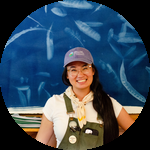
Callie Chappell
Callie is a postdoctoral research scholar in the Department of Biology at Stanford University studying soil microbiomes in agricultural systems. They have a PhD in Biology and are passionate about advancing science that centers the needs and expertise of local communities. In addition to scientific research, they have a decade of experience in informal learning, especially focusing on youth education, science, and art. You can read more about Callie at https://www.calliechappell.com.
Lab Notes
Nothing posted yet.
Additional Information
This is a two part project that teaches data sovereignty through environmental biology. First, students will analyze 16S DNA sequencing results from soil collected in a community garden, learning how microbial diversity reflects environmental conditions and land stewardship. Second, students will put the data sovereignty conversation into practice by building their own personal servers and storing their findings securely. This hands-on approach shows students how environmental data, photos, videos, and cultural observations can be governed responsibly and kept under community control.
Project Backers
- 0Backers
- 0%Funded
- $0Total Donations
- $0Average Donation