About This Project
Moose are Maine icons, are doing well, and continue to be hunted. During 2011, our lab collected lungs from hunter-harvested moose and inspected them for parasites; about 25% had lungworms, Echinococcus granulosus (EG), or both. This year, we would like to revisit the moose lung survey in order to reassess the current risk of EG in Maine, and to explore the overlaps between moose and coyote habitat that may be perpetuating this zoonotic parasite in Maine wildlife.
Ask the Scientists
Join The DiscussionWhat is the context of this research?
Moose are an iconic Maine animal, are doing well, and continue to be hunted. Moose hunting in Maine is valued for many reasons (source of meat, cultural, economic, recreation) and is a sustainable practice; moose hunting mortality at the current levels is not used for population control. However, young moose fall prey to parasites and other diseases yearly. While external parasites like winter ticks are problems, internal parasites- some of public health significance- also impact moose health. Because parasite loads are higher when animals are concentrated into smaller areas, we want to compare lung parasites in 2016 versus 2011 and consider implications for moose management, the primary tool for wildlife health.
What is the significance of this project?
During 2011, our lab collected lungs from hunter-harvested moose and inspected them; over 25% were affected with lungworms and parasitic “cysts”: Echinococcus granulosus (EG), a tapeworm. The moose is an intermediate host for this tapeworm; once the moose dies, if the lung cysts are consumed by a coyote, dog or wolf (“canid”), they mature in the new host’s intestine, and fecal contamination can infect animals like moose, or people. Because of this zoonotic risk, we genotyped EG from the moose and found it to be a silvatic biotype, only rarely found in people. We advised public health officials and Maine’s veterinarians about this risk. Moose that stay in a small region are more likely to carry EG, so EG levels may be associated with habitat.
What are the goals of the project?
We will survey Maine's hunters to engage them in this study, to advise them about the risk of having dogs exposed to lung cysts, and to provide moose lung samples from legally-harvested moose. A senior preveterinary student has already begun the hunter survey process, and will engage in sample acquisition at moose "tagging stations". We expect to acquire 50 to 100 sets of lungs by this method, which represents 2.5 - 5% of the expected total moose permit number. Because higher yields are expected in higher density regions of the state, we will concentrate our efforts in those wildlife management districts. Numbers of parasites (EG/lungworms/others) will be quantified per lung set, and EG biotype will be assessed for a subset. We hope to link location with EG prevalence.
Budget
These funds will allow us to assess the general health of a population that is also being studied using approximately 100 radio-collared moose (funded by the Maine Department of Inland Fisheries and Wildlife). By combining new information with our previous studies and with location data, we may be able to identify "hot spots" for transmission of this parasite between canids and moose. This kind of longitudinal data may help inform management strategies, including habitat improvement for moose. We hope to be competitive for funding from our regional wildlife agencies and other "One Health" funding sources with the data derived from this study. Travel costs will allow us to collect hunter-provided moose lungs, DNA typing will allow us to identify the type of parasites present, and publication/presentation costs will allow us to spread the word about our studies, including how to prevent the spread of Echinococcus granulosus to dogs and people.
Meet the Team
Team Bio
The team for this project consists of Anne Lichtenwalner, our lab technician Ann Bryant, and Grace Chaves, an undergraduate pre-veterinary student at the University of Maine. Our lab has been involved in moose health since about 2009, when a young moose died and the Maine Department of Inland Fisheries and Wildlife needed to know why. Since then, we have provided health information for several hundred moose cases, including the radio-collared moose studies.
Anne Lichtenwalner
Anne Lichtenwalner earned her DVM at Oregon State University, and her PhD in reproductive physiology from the Department of Animal and Veterinary Sciences at University of Idaho in Moscow, Idaho. She completed a fellowship in infectious disease at the University of Washington School of Medicine. Her current areas of research include diseases of both livestock and wildlife, especially those with zoonotic potential. Since coming to Maine in 2008, she has collaborated on multiple small ruminant health projects, including studies of footrot, caseous lymphadenitis and parasite control. She is now the director and acting pathologist of the University of Maine Animal Health Laboratory, which is a member lab of the Northeast Wildlife Disease Cooperative. Since 2012, she has collaborated with the Maine Department of Inland Fisheries and Wildlife on moose studies.
Additional Information
Please see additional photos of our findings here.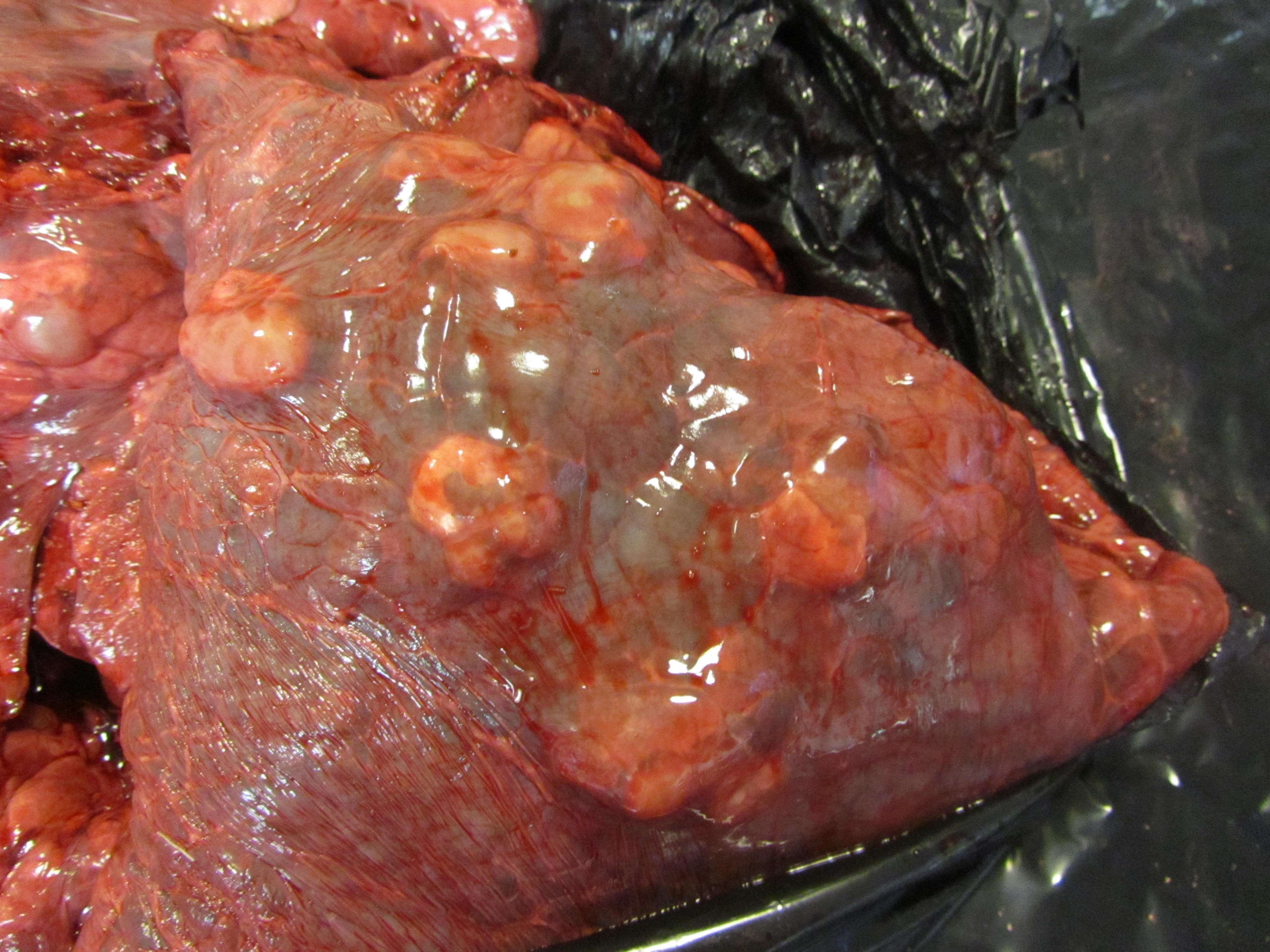
Project Backers
- 0Backers
- 0%Funded
- $0Total Donations
- $0Average Donation