About This Project
I seek to make a collection of designer flowers as the basis for a project teaching principles of plant biotechnology. This grant will support the engineering of these flowers to be provided for hands-on experiments in university practicals where students can design and analyze their own flowers. The whole process will be documented and open access to inspire interest in plant genetics and lay the foundation for new tools in flower engineering.
Ask the Scientists
Join The DiscussionWhat is the context of this research?
Arabidopsis thaliana is a small flowering plant largely unknown to non-scientists and is the most studied plant in the world due to its use as a model organism. Over the past 50 years, tens of thousands of scientists backed by millions of government funded dollars, have used this model to uncover fundamental aspects of how plants work. Of all the discoveries in plant biology facilitated by Arabidopsis, perhaps the most robust and studied aspect is flower development (https://pubmed.ncbi.nlm.nih.gov/38345422/).
The hundreds of papers describing phenotypes of mutations affecting floral organ patterning, identity, size, and shape, alongside new tools in biotechnology, enable the "design" of novel flower types. I believe that designing new forms of the Arabidopsis flower can offer a living educational tool that can spark students creativity when thinking about how plants develop and can be engineered with modern biotechnology (https://www.nickdesnoyer.com/plant-engineering).
What is the significance of this project?
This project aims to further the development of Arabidopsis lines with interactive flowers whose patterning can be designed and analyzed by students using induction systems. These lines contain the visual reporters, GUS (blue) and RUBY (pink) under the bi-directional control of an operon that can be activated by either dexamethasone (dex) or heat shock. Heat shock is an easy and accessible treatment that, in this genetic background, creates pink stripes and spots allowing for "lineage-tracing" analysis at three levels depending on the users equipment: direct observation (RUBY), tissue staining (GUS), and fluorescent microscopy (GFP-NLS).
The innovation of this project is that it combines art and science. Firstly, students can design the pigmentation pattern of flowers using inducer treatments to activate RUBY and create a one-of a kind flower. Secondly, they use accessible genetic tools to perform real lineage-tracing experiments & analysis with the potential for discovery.
What are the goals of the project?
The short-term goal of this project is to further develop these designer flowers and distribute them to educational institutions with biosafety level 1 clearance. To ensure biosafety, all lines generated will be in a sterile mutant background. The priority of this grant money would be to make an inducible rescue construct so that the sterile flowers may revert back to wild-type allowing seed collection of homozygous mutants. If awarded, I would start the cloning and transformation process in these genetic backgrounds as soon as possible.
The long-term goal is to foster a new movement in art and science with three aims. Firstly, create open materials that reduce the barrier for students and amateur biologists to do research on plants. Secondly, engage the public in the advances and importance of plant genetics by designing new and beautiful flowers. Finally, furthering our understanding of plant development through a creative community project.
Budget
These budget items provide the essentials for molecular cloning, genetic transformation, and growth of Arabidopsis plants with some flexibility for adjustments based on specific project needs.
 Project Timeline
If awarded, I will begin cloning the constructs as soon as possible. With my experience, I anticipate the cloning to take about 2 weeks. The constructs will then be floral dipped in the "designer flower" line and primary transformants selected about 2 months after dipping. Because the desired line is relatively complex genetically, it will realistically be achieved by the end of 2025 to begin seed propagation and distribution in 2026.
Mar 01, 2025
Clone inducible rescue construct
Apr 01, 2025
Begin propagating designer line and
Jun 01, 2025
Select T2 lines homozygous for the transgene.
Aug 01, 2025
Identify functional transformant lines.
Dec 25, 2025
Begin propagating designer line and announce online.
Meet the Team
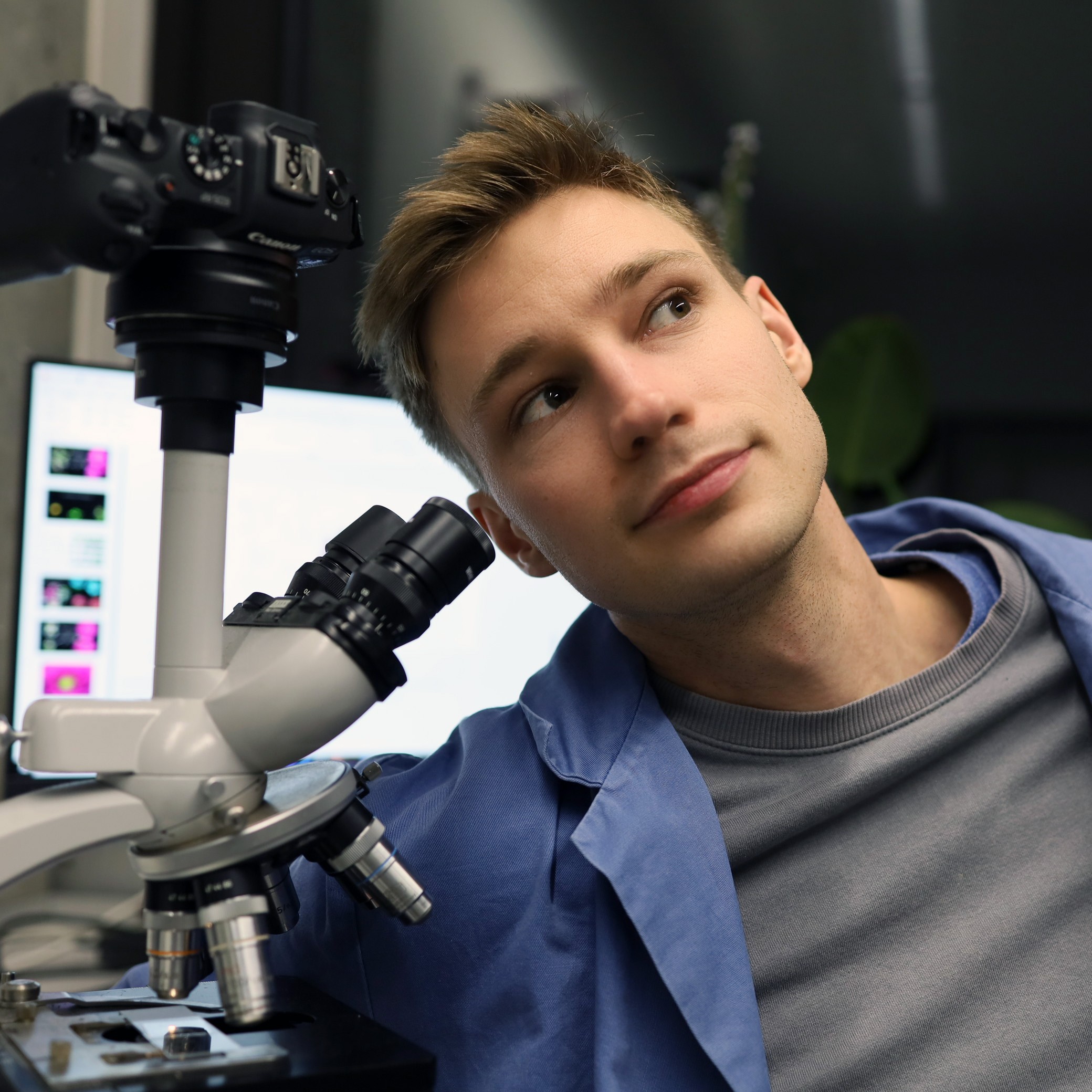
Nick Desnoyer
I am a researcher passionate about genetics, biotechnology, and microscopy in plants. I have a dream to inspire others about the magic of plant biology by taking creative approaches in imaging and genetic engineering. I feel inspired by the things I experience in the lab on a daily basis and want to share that feeling with others through visuals and open access tools for students.
Lab Notes
Nothing posted yet.
Project Backers
- 0Backers
- 0%Funded
- $0Total Donations
- $0Average Donation