
Please wait...
About This Project
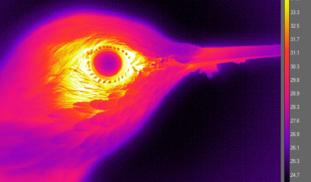
When hummingbirds use more energy than they consume, they use deep hypothermia (torpor) at night to lower energy costs. Torpor is not restorative like sleep so extended use can have physiological consequences. Our field work suggests hummingbirds might be capable of controlled shallow hypothermia. This would be a novel tool for periods of low energy intake. We will use thermal imaging to track nighttime body temperature to see if hummingbirds use the more restorative shallow hypothermia.
More Lab Notes From This Project

Browse Other Projects on Experiment
Related Projects
Satellite tracking the secret lives of vulnerable juvenile Loggerhead sea turtles off Morocco’s Coast
This pioneer project marks the first time in Morocco's history for satellite transmitters deployed on sea...
Out for blood: Hemoparasites in white-tailed deer from the Shenandoah Valley in Northern Virginia
Our research question centers about the prevalence and diversity of hemoparasites that infect ungulate poplulations...
Using eDNA to examine protected California species in streams at Hastings Reserve
Hastings Reserve is home to three streams that provide critical habitat for sensitive native species. Through...
