About This Project
Ice Age fossils include iconic species like saber-toothed cats and mammoths. In South America, giant armoured mammals called glyptodonts once roamed the Pampean Plains. Among them, Panochthus stood out for its size. Despite this we unknown its dietary preferences and its external appearance. In 2021, we discovered an exceptionally preserved Panochthus in General Guido, Argentina. The aim of this project is to reveal these biological aspects using modern techniques.
Ask the Scientists
Join The DiscussionWhat is the context of this research?
Glyptodonts are giant ice-age mammals similar to a huge armadillo. With heavy shells covering its back, tail, neck and probably its face, this Pleistocene “knights” roamed the Pampean Plains during a million years to sudden disappear 10,000 years ago. While evolutive relationships of glyptodont species were studied, many aspects of their biology, such as diet, presence of parasites or soft-tissue anatomy, remain poorly understood. Preliminary observations of this exceptionally preserved Panochthus revealed features previously unknown to science, including unusual textures on the shell possibly caused by parasitic bites and what might be the insertion area of a trunk. Similarly, we found several bony blocks (osteoderms) covering the face of the animal forming a facial armour. This specimen allows us to answer the following research questions: glyptodonts had a special diet? They suffer infections caused by insect bites? Its face had a trunk or a facial armour?
What is the significance of this project?
Glyptodonts were a diverse and one of the most successful mammal kins on the Ice-Age. Despite that, there are several biological aspects about glyptodons (specially Panochthus) that are unknown. Our specimen would allow us to change our understanding of these aspects by:
-Determine diet and ecological context, performing stable isotope analysis (δ13C and δ18O).
-Assess infections caused by parasitic insects, analysing osteoderm texture and histological structure.
-Reconstruct the face of the animal by examining possible facial armour and corroborating presence of a trunk.
These findings will shed new light on the lifestyle and evolution of Pleistocene megafauna in the Pampean Plains of South America. Also, this project would impact on local people by bringing education through interactive talks to students living in remote areas (such as General Guido) where access to scientifical knowledge is difficult.
What are the goals of the project?
First, we will travel 300 km from Buenos Aires to General Guido, remove the protective plaster jacket, and clean the fossil over a three-week period. We need to turn the shell over with heavy machinery (e.g., forklifts). Then the shell will be emptied, and the bones are going to be extracted and reinforcing these with special adhesives and resins. Then, shell and bones will be cleaner using carbide tips, spatulas, and brushes. Second, we will take measurements with digital callipers to compare with relatives (like Glyptodon and Armadillos) to confirm the presence of a facial armour. Also, we will take histologic thin sections to corroborate parasitic infections and the presence of a trunk and took bones isotopic samples from tooth to assess its diet. We will integrate all data to test our research questions. Third, after publishing, we will share results with public through talks and museum exhibits.
Budget
To carry out this project properly, we need funding for essential tools and preparation work. A detailed study of the specimen requires binocular loupes and a high-resolution camera to observe small features—such as insect bites and the arrangement of facial armour. These observations are key to reconstructing what this animal looked like and how it lived. We will also perform histological analysis to investigate if it had a trunk, and isotopic studies to understand its diet. But before any of that, the fossil must be properly cleaned and consolidated. This will stabilize the specimen and make the scientific analyses possible. Without this first step, none of the other goals can be achieved. Each part of this budget is focused on ensuring the fossil is carefully studied and preserved, helping us uncover new details about one of the most impressive Ice Age mammals in South America.
Endorsed by
 Project Timeline
The project will run from January 2026 to December 2026. It includes fossil field trip to preparation in January, laboratory analysis in February–August and writing and publication in November. Finally, we will share our discovering through talks, conferences and immersive videos.
Jul 07, 2025
Project Launched
Jan 08, 2026
Field trip to General Guido
Jan 22, 2026
Fossil preparation in General Guido
Jan 31, 2026
Back to Buenos Aires
Feb 11, 2026
Laboratory analysis starts
Meet the Team
Affiliates
Affiliates
Team Bio
We are a team of early career paleontologist researchers studying independently the paleobiology of Ice Age Mammals of Buenos Aires, Argentina. We meet through paleontology, we are married and because paleontology is our passion, we are starting this project together.
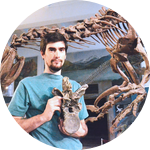
Mauro Aranciaga
I grew up in General Guido city (Buenos Aires province), a very small population of farmers. Since my childhood, I develop my passion for nature, especially fossils. In that time, I look for fossils in the very same places where we extract the Panochthus many years after.
After finish the high school, I moved to La Plata, where I received my Bachelor of Science degree in Biology and my Ph.D. in Natural Sciences from the University of La Plata. Currently, I'm studying dinosaurs in Buenos Aires, but my interest for Ice Age mammals has never died. For that reason, independently, me and Julieta (a palaeontologist and my wife) keep going to my hometown to excavate and study these interesting animals. As we said above, in 2021 we extract this beautifully preserved specimen with an independent project.
My primary goal here is, not only know more about this extinct living beings (like Panochthus), but also to develop palaeontology in the place where I grew up. This project aims to teach local people about the amazing animals that lived on its backyards about 15000 years ago. Also, I want to try to inspire young people to study science, especially palaeontology, in a place where the access to education is difficult.
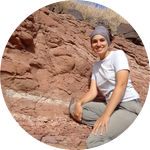
julieta de pasqua
I was born in Buenos Aires, and from a young age, I was fortunate enough to visit different natural science museums and national parks throughout Argentina. These places sparked a deep curiosity about the history of life on Earth. In every square or park, it was common to see me “digging” in the ground in the hope of finding new fossils. Over time, and with the encouragement of my family, that childhood passion became my vocation.
I decided to study palaeontology at the Faculty of Exact and Natural Sciences (UBA). During my studies, I collaborated with different palaeontology laboratories and was able to participate in excavations of dinosaurs, mammals, and fish. Finally, I fell in love with fossil fish and am currently pursuing my PhD in Palaeozoic fish (350 million years)
Lab Notes
Nothing posted yet.
Project Backers
- 2Backers
- 1%Funded
- $15Total Donations
- $7.50Average Donation