

Please wait...
About This Project
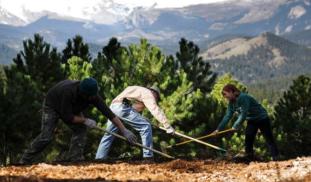
Our previous study on the decay of forest waste products found that the compost produced by wild fungi holds up to twice as much carbon as natural montane soils (duff, produced by natural organic decay).
"The carbon sequestration potential of fungally produced composts" will investigate the carbon contents of post decay composts produced by white and brown rot fungus both in situ and in the lab. These techniques could aid in the natural sequestration of carbon in soils.
More Lab Notes From This Project

Browse Other Projects on Experiment
Related Projects
Satellite tracking the secret lives of vulnerable juvenile Loggerhead sea turtles off Morocco’s Coast
This pioneer project marks the first time in Morocco's history for satellite transmitters deployed on sea...
Out for blood: Hemoparasites in white-tailed deer from the Shenandoah Valley in Northern Virginia
Our research question centers about the prevalence and diversity of hemoparasites that infect ungulate poplulations...
Cyanova: A modular, budget photobioreactor for the efficient cultivation of microalgae
Microalgae are overlooked constantly as a protein source because of it's high costs and complex maintenance...
