

Please wait...
About This Project
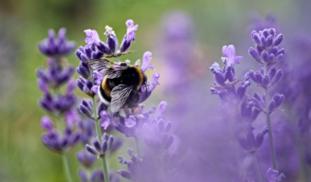
The recent ban of neonicotinoids across Europe due to their impacts on the bee population has raised concern that other common garden products have similar impacts. We set out to investigate how glyphosates – herbicides, give rise to complications in bee health and their overall population numbers.
We hypothesise that bees exposed to glyphosates will experience increased vulnerability to parasitic infections, along with negative changes in foraging behaviour and foraging ability.
More Lab Notes From This Project

Browse Other Projects on Experiment
Related Projects
Satellite tracking the secret lives of vulnerable juvenile Loggerhead sea turtles off Morocco’s Coast
This pioneer project marks the first time in Morocco's history for satellite transmitters deployed on sea...
Out for blood: Hemoparasites in white-tailed deer from the Shenandoah Valley in Northern Virginia
Our research question centers about the prevalence and diversity of hemoparasites that infect ungulate poplulations...
Cyanova: A modular, budget photobioreactor for the efficient cultivation of microalgae
Microalgae are overlooked constantly as a protein source because of it's high costs and complex maintenance...
.jpeg&caption=Experiment.com+-+Crowdfunding+for+Science+Research)